Fragr school
EDT vs EDP vs Extrait: What Concentration Actually Means (and What It Doesn't)
8 min read · 6 chapters
Those three letters on the box — EDT, EDP — are the most misread label in fragrance. They tell you one thing only: roughly how much perfume oil is dissolved in the alcohol. They do not tell you the fragrance is better, stronger, longer-lasting, or even that it smells the same as the other concentration sitting next to it on the shelf. Plenty of people have blind-bought an EDP expecting 'more of the EDT' and received an entirely different perfume.
The mythology runs deep: EDP always beats EDT, extrait is always worth the premium, higher concentration means the room will know you arrived. Every one of those claims is false often enough to cost you money. Concentration is a recipe variable, like oven temperature — it changes how a composition behaves, and perfumers actively rewrite the formula when they change it.
This guide covers the actual percentage ranges, the famous cases where the EDT and EDP are different fragrances entirely, why longevity and projection are separate properties, and the specific situations where the cheaper EDT is genuinely the better bottle.
The Percentages: Eau Fraiche to Extrait
Fragrance is perfume oil (the 'concentrate') dissolved in ethanol, usually with a few percent water. Eau fraiche sits around 1-3% oil, eau de cologne 2-5%, eau de toilette 5-15%, eau de parfum 15-20%, and extrait de parfum (also labeled parfum or pure parfum) anywhere from 20% to 40%. Those ranges are conventions, not law — no regulator anywhere requires a brand to hit a number, and almost none disclose theirs. One house's 'EDP' can carry less oil than another house's EDT.
The overlap matters more than the labels. A 15% EDT and a 15% EDP are chemically the same dilution. This is why 'is EDP stronger?' has no universal answer: within a single brand's lineup, usually yes; across brands, it's a coin flip. Treat the letters as a hint about intent — brighter and airier versus denser and closer to the skin — not as a spec sheet.
| Type | Typical oil % | Typically lasts | Best for |
|---|---|---|---|
| Eau fraiche | 1-3% | 1-2 hours | Post-gym refresh, brutal heat |
| Eau de cologne | 2-5% | 2-3 hours | Classic citrus splashes, resprays |
| Eau de toilette | 5-15% | 3-6 hours | Office, daytime, hot climates |
| Eau de parfum | 15-20% | 6-10 hours | Evenings, cooler weather, one-application days |
| Extrait / parfum | 20-40% | 10+ hours | Close-range wear, winter, special occasions |
The concentration ladder at a glance
Same Name, Different Fragrance
Here is the trap that catches everyone: brands routinely rebuild the formula when they move up a concentration. Dior Homme EDT is a powdery iris-cocoa scent with a cool, lipstick-like elegance. Dior Homme Intense keeps the iris but pours in vanilla, pear, and ambrette until it becomes a plush nighttime gourmand — related, but nobody would mistake one for the other in a blind sniff.
The Sauvage line is the modern masterclass. The EDT is a bright bergamot-ambroxan pepper bomb. The EDP folds in star anise, nutmeg, and a vanilla base — rounder, less screechy. The Parfum goes deeper into sandalwood and tonka, and the Elixir is a compact, spiced lavender-licorice monster that shares little with the EDT beyond the name on the cap. Four bottles, four compositions. Jean Paul Gaultier pulled the same move: Le Male is minty lavender-vanilla; Le Male Le Parfum swaps the mint out and doubles down on iris and warm vanilla until it's practically a different pillar.
The practical rule: never blind-buy a higher concentration because you love the lower one. Check the note pyramid, check whether the perfumer changed, and assume 'same name' guarantees nothing. Sometimes the rework is an upgrade — Dior Homme Intense outclasses its EDT for most fans — but it is a new purchase decision, not a strength upgrade.
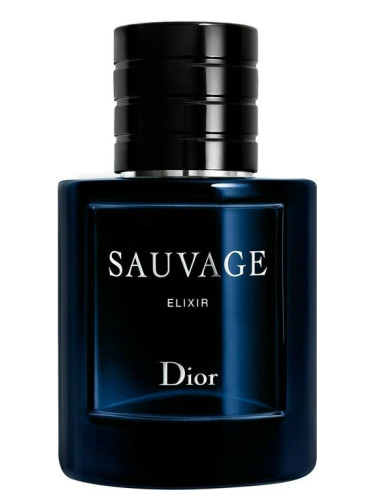
Shares a name with Sauvage EDT and almost nothing else — a spiced lavender-licorice composition that proves concentration lines are often separate fragrances.
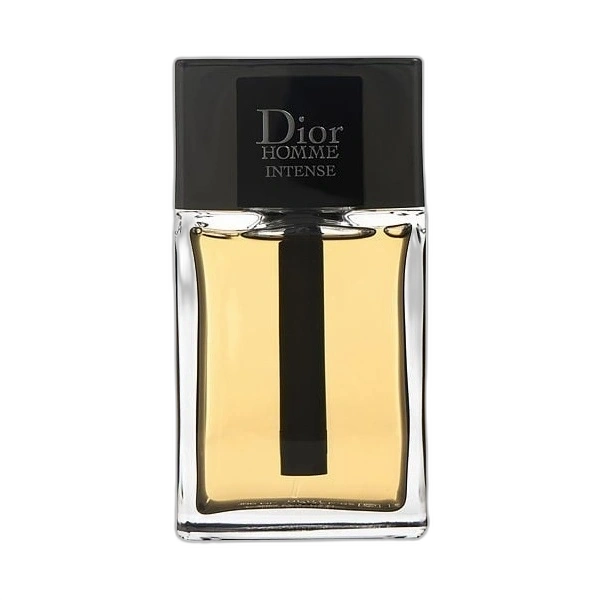
The textbook case of an 'Intense' being a rewrite, not a boost: the EDT's cool iris becomes a plush vanilla-iris gourmand.
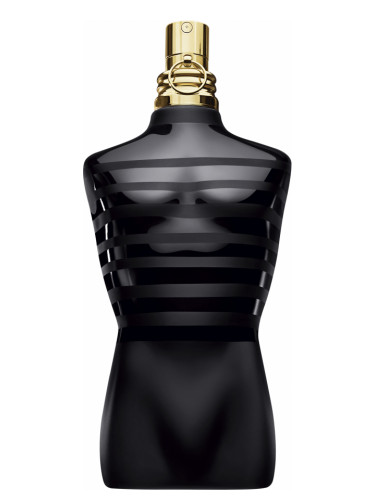
Drops the original's signature mint entirely for iris and dense vanilla — a flanker wearing a concentration's clothing.
Longevity Is Not Projection
People use 'strong' to mean two different things, and concentration affects them differently. Longevity is how many hours the scent survives on your skin. Projection (sillage) is how far it radiates off you. An extrait can last fourteen hours while staying within a foot of your body; a citrus EDT can fill an elevator for ninety minutes and then vanish.
The mechanism: projection is driven by evaporation rate. Lots of alcohol and light molecules — citrus terpenes, aldehydes — means fast evaporation and a big scent bubble that burns itself out. Heavy base materials like musks, woods, and resins evaporate slowly, so they whisper for hours. Extraits also lean on fixatives — high-molecular-weight materials that anchor volatile notes and slow the whole pyramid down. More oil usually buys you hours, not radius.
So match the tool to the job. Want to be noticed across a room for a short evening? A loud EDP or a heavily-sprayed EDT projects better in hours one and two. Want something still alive on your wrist at midnight? That's extrait territory — but accept that most of its life is a personal scent, not an announcement.
Price-per-Wear: Doing the Actual Math
A standard atomizer delivers roughly 0.1 ml per spray, so a 100 ml bottle holds around 800-1,000 sprays. If a 100 ml EDT costs $110 and you wear five sprays, that's about 60-70 cents per wear. The matching EDP at $150 might need only three or four sprays for the same presence and last through the day without a respray — often landing at nearly the same cost per wear despite the scarier sticker.
Extraits flip the math again: a 60 ml Sauvage Elixir costs more per milliliter than almost anything else in the line, but at two sprays per wear a small bottle is 300 wears — most people hit reformulation or boredom long before the bottom of the bottle. The genuinely bad value is the one that fits your life worst: a 10-hour extrait you shower off after 4 hours, or a 3-hour EDT you have to re-apply twice a day. Price the wear, not the milliliter.
When the EDT Is Genuinely the Better Buy
Hot climates are EDT country. Heat accelerates evaporation, so a dense EDP that behaves politely at 60°F can turn suffocating at 90°F — sweet ambers and vanillas especially read twice as loud in humidity. The EDT's lighter build and higher citrus load is a feature, not a compromise, when your skin is running warm. This is why so many Mediterranean classics are toilettes and colognes.
Offices and shared spaces also favor EDT logic: you want hours three through eight to be a close, clean skin scent, not a cloud your coworkers file complaints about. And EDT compositions are often simply brighter — the higher alcohol ratio and lighter top-note load give you more sparkle in the opening. If the opening is what you fell in love with, the EDT preserves it better than the EDP that traded it for base-note weight.
Flankers vs Concentrations: Reading the Shelf
A concentration is nominally the same composition at a different oil load. A flanker is a new fragrance sold under a famous name — new pyramid, often a new perfumer, sharing only DNA and marketing. The industry blurs the line on purpose: Sauvage Elixir is a flanker that looks like a concentration; Bleu de Chanel EDT, EDP, and Parfum are true re-orchestrations of one idea, each rebuilt by the in-house perfumer with the same skeleton.
How to tell before you pay: compare the published note pyramids (a changed top half means a rework), check if the perfumer credit changed, and read whether the brand calls it a concentration or gives it a subtitle — words like Intense, Elixir, Le Parfum, or Absolu almost always signal a rewritten formula. When in doubt, treat it as a brand-new fragrance and sample it like one.
Concentration tells you how a fragrance is built, not how good it is. The letters predict behavior — how fast it launches, how long it hums, how it handles heat — and even those predictions break the moment a brand rewrites the formula between versions, which the biggest names in the business do constantly.
So flip the default question. Not 'which concentration is strongest?' but 'which version fits the hours I'll actually wear it?' A Florida commuter and a Chicago dinner guest should buy different bottles of the same name — and both should sample before assuming the EDP smells like the EDT they loved.
Questions people ask
Is an EDP always stronger than an EDT?
Within one brand's lineup, usually — but not always, and across brands the ranges overlap so much that the label proves nothing. An EDT at 15% oil can out-muscle a 15% EDP. Concentration is an undisclosed range, not a regulated number, so judge each bottle on its own performance.
Will the EDP of my favorite EDT smell the same?
Often not. Brands routinely rework the formula between concentrations — Sauvage EDP adds star anise and vanilla the EDT doesn't have, and Le Male Le Parfum drops the original's mint entirely. Always compare note pyramids and sample before buying up the ladder.
Why does my EDT disappear after two hours?
It probably doesn't — your nose adapts to a constant smell within about 30 minutes, a phenomenon called olfactory fatigue. Light citrus-heavy EDTs do genuinely fade faster, since their top-heavy molecules evaporate quickly. Ask someone else before declaring a fragrance dead; they can usually still smell it.
Is extrait de parfum worth the extra money?
Only if you want what it actually does: very long life, worn close to the skin, with a quiet opening. If you're chasing a big scent trail, a loud EDP projects further. Per-spray economics often favor extrait since one or two sprays is a full wear.
What's the difference between a flanker and a concentration?
A concentration is the same composition at a different oil percentage; a flanker is a new fragrance borrowing a famous name. Marketing blurs them deliberately — subtitles like Intense, Elixir, or Le Parfum almost always mean a rewritten formula. Treat anything with a subtitle as a new scent to sample.
Which concentration is best for hot weather?
EDT or lighter. Heat speeds evaporation, so dense EDPs and extraits — especially sweet amber and vanilla bases — can turn cloying and project far more than intended in humidity. A citrus-forward EDT is built for exactly those conditions and will wear cleaner all day.
Want picks made for you?
Tell the recommender what you already own and it reads the DNA of your shelf.
Get recommendationsAs an Amazon Associate we earn from qualifying purchases.