Fragr school
Your First Five Bottles: The Beginner Rotation That Actually Works
11 min read · 7 chapters
Every beginner asks the same question — 'what should I buy first?' — and the internet answers with fifty-bottle tier lists that help nobody. Here's the truth: a starting fragrance wardrobe is not a collection, it's a toolkit, and a toolkit is defined by jobs, not by objects. There are exactly five jobs a normal life throws at a fragrance: an everyday scent, a hot-weather scent, a cold-weather scent, a night-out scent, and one bottle that's purely about you. Fill those five slots and you are, functionally, done. Everything after bottle five is hobby, not need.
The second thing nobody tells beginners: every slot has two correct answers. The designer icons — Bleu de Chanel, Sauvage, Dior Homme Intense — earned their status, and the clone-adjacent houses like Lattafa and Armaf now make inspired-by and original compositions so competent that the budget path through all five slots costs less than one designer bottle. I'll give you both answers for every slot. Neither path is wrong; mixing them is usually right.
The third thing is the one that will save you real money: do not buy all five at once. The single most expensive mistake in this hobby is a beginner blind-buying a starter pack off a YouTube list before learning what their own skin and nose actually like. This guide covers the slots, the picks, the buying order, the decant strategy, and the habits — plus the hype you should ignore from day one.
Think in slots, not bottles
The slot system works because it starts from your calendar instead of from a ranking. A versatile daily carries the office, errands, and everything unremarkable — it'll log more wears than the other four combined. A fresh summer scent exists because heat destroys heavy fragrances; a warm winter scent exists because cold erases light ones. A night-out scent is allowed to be loud and sweet in ways the daily never can be. And the wildcard is the slot where you stop being sensible — the scent that's about identity, not utility.
The system's real power is that it prevents the classic beginner failure: buying five variations of the same smell. Nobody plans to own five blue fresh fragrances; it happens one 'safe' purchase at a time, because your taste at the start is a single data point pointing in one direction. Slots force coverage. When Sauvage-alike number three tempts you, the question isn't 'is it good?' — it's 'which slot is empty?' If the answer is winter, the wallet stays shut.
The five slots, mapped: a designer icon and a budget alternative for each
Here's the full map. Slot one, versatile daily: Bleu de Chanel EDP is the reference — citrus-woody polish that's correct nearly everywhere — and Armaf Club de Nuit Intense Man is the famous budget counterpunch, a smoky pineapple that borrows its blueprint from Creed Aventus and costs less than dinner. Slot two, fresh summer: Dior Sauvage EDP is the crowd-pleasing juggernaut; Lattafa Fakhar delivers the modern fresh-ambery lane, openly inspired by YSL Y, at a tenth of designer money. Slot three, warm winter: Dior Homme Intense is cocoa-dusted iris elegance; Lattafa Khamrah is the boozy cinnamon-dates gourmand that conquered the budget world — sweet enough to moonlight in slot four all winter.
Slot four, night-out sweet: Jean Paul Gaultier Ultra Male is the reigning club standard, all candied pear and vanilla; Lattafa Asad is the budget answer that projects just as shamelessly. Slot five, the wildcard, is yours by definition — but if you want coordinates, Terre d'Hermès is the designer route to smelling like nobody else at the party (orange, flint, vetiver), and Lattafa Raghba is the budget route into sweet, smoky oud territory. The wildcard is the one slot where 'do people like it?' is the wrong question. The right one is 'does it feel like mine?'
| Slot | Job | Designer icon | Budget alternative | Ballpark |
|---|---|---|---|---|
| 1. Versatile daily | Office, errands, default | Chanel Bleu de Chanel EDP | Armaf Club de Nuit Intense Man | $130 vs $35 |
| 2. Fresh summer | Heat, daytime, casual | Dior Sauvage EDP | Lattafa Fakhar | $120 vs $30 |
| 3. Warm winter | Cold weather, evenings | Dior Homme Intense | Lattafa Khamrah | $115 vs $30 |
| 4. Night-out sweet | Clubs, parties, late hours | Jean Paul Gaultier Ultra Male | Lattafa Asad | $95 vs $30 |
| 5. Wildcard (you) | Identity, not utility | Hermès Terre d'Hermès | Lattafa Raghba | $105 vs $25 |
The five-slot starter map
The slot-one gold standard: works at a desk, a date, and a wedding. If you only ever buy one designer bottle, this is the argument for it.
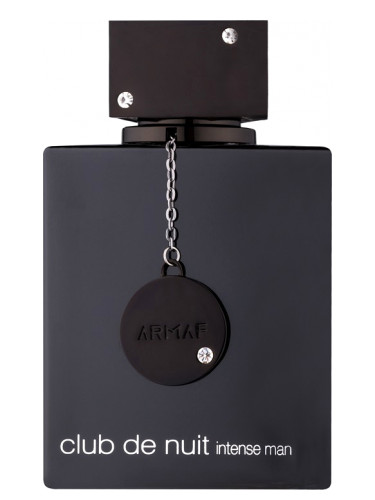
The most famous budget fragrance on earth — smoky pineapple in the Aventus mold for around $35. The opening is harsh for ten minutes; everything after is absurd value.

Boozy dates, cinnamon, and vanilla — the budget winter gourmand that outperforms bottles five times its price. Two sprays is plenty.
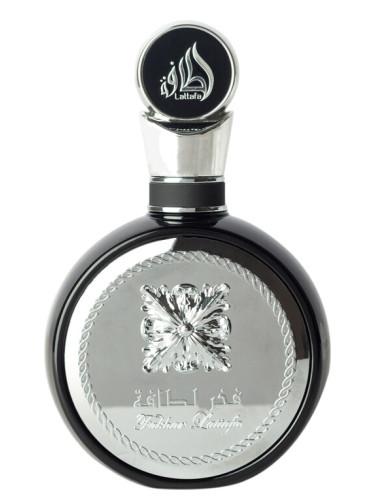
A fresh, ambery crowd-pleaser openly inspired by YSL Y — the cheapest legitimate way to fill the summer slot with something people will ask about.
Why your first buys should be EDPs
Concentration is the fine print that decides whether a beginner thinks fragrance 'works' at all. Eau de cologne runs around 2-5 percent perfume oil, eau de toilette roughly 5-15, eau de parfum about 15-20, and extrait beyond that. For a first buy, EDP is almost always the right call, and the reason is economics, not machismo: a beginner's most common complaint is 'it disappeared in two hours,' and that complaint is usually an EDT story. An EDP gives you six to eight hours from three sprays — enough to actually live with the scent, learn its arc, and feel like your money bought something.
There are exceptions, and they prove the rule. Some EDTs are the better composition — brighter, better-proportioned — and in brutal heat a lighter concentration is a feature. But EDT rewards experience: knowing when to reapply, when lightness is the point. Extrait, at the other end, is money spent on density a beginner can't use yet. Start at EDP, learn what six hours of one fragrance feels like on your skin, and branch out from the middle once you know what you're adjusting for. Conveniently, the entire budget tier agrees: nearly every Lattafa and Armaf hit ships as an EDP by default.
Buy one bottle. Wear it for two weeks. Then buy the next.
Here is the discipline that separates a good first year from an expensive one: fill the slots sequentially. Buy slot one, wear it for two solid weeks, and pay attention like it's homework — how long it lasts on your skin, when people notice it, whether you're still happy with it at hour six, whether you got sick of it by day ten. Every one of those observations recalibrates your next purchase. Maybe everything dies fast on your skin and you need stronger concentrations across the board. Maybe you learned that sweet scents make you queasy by lunchtime. That knowledge is worth more than any review, and it only costs time.
Buying all five at once forfeits all of it. You've locked in five guesses based on other people's skin and other people's hype, and statistically one or two will be misses you now own 100 ml of. The sequential path converts each bottle into training data for the next: five purchases, each smarter than the last, spread across a few months. The rotation is finished by summer either way. One path arrives with five bottles you chose; the other with five bottles a tier list chose for you.
The decant-first strategy
You can compress the entire learning curve for about forty dollars: before buying any full bottle, order 5 ml decants of both candidates for whichever slot you're filling. Decant sellers split authentic bottles into small sprayers for $8-20 each, which means the Bleu-versus-Club-de-Nuit question — or Sauvage versus Fakhar — gets answered on your actual skin, in your actual weather, over a week of real wears, before a single full-size purchase. Five milliliters is roughly fifty sprays: two weeks of honest testing.
This matters most at the designer tier, where a miss costs three figures, but it's worth doing even for the budget picks — thirty dollars wasted is still wasted, and more importantly, decanting first trains the habit that will save you hundreds later when niche bottles start whispering at you. The math never changes: information is cheap, full bottles are not, and the decant seller is selling you certainty.
Storage and rotation habits from day one
Fragrance has three enemies: heat, light, and oxygen. The bathroom shelf — humid, warm, bright — is the worst place in your home for a bottle, and it's where most beginners keep theirs. A closet or a drawer in a room with stable temperature is all you need; the original box is genuinely good armor, not packaging to discard. Do this from day one and your bottles will smell identical in year five. Don't, and the citrus top notes go dull and vinegary first — precisely the notes your summer slot depends on.
Rotation itself is a habit worth forming early: don't wear the same bottle every single day. Your nose adapts to a constant scent within weeks, and once you can't smell yourself, you'll overspray to compensate — the classic origin story of the officemate everyone dreads. Alternating even between two bottles keeps your nose honest and both scents vivid. It also spreads consumption, which quietly matters: a 100 ml bottle holds around 800 sprays, so a five-bottle rotation at three sprays a day gives each bottle a multi-year lifespan. Spray the chest and neck, not the air, not your clothes' same spot daily, and never rub your wrists together — friction crushes the opening you paid for.
What to ignore: hype cycles, beast-mode brain, and batch-code paranoia
The moment you enter this hobby online, three brain-worms will come for you. First, the hype cycle: every month has a new 'this destroys everything' release, and chasing them means your five slots become fifteen bottles of trending sameness. The icons in this guide have been recommendable for five to twenty years; nothing that matters is leaving the shelves this month. Second, 'beast mode or trash' — the YouTube framing that rates fragrance like a car stereo, where projection is quality and anything polite is 'weak.' It's exactly backwards for real life: the situations where loudness helps are a sliver of your week, and skin scents get more compliments than sillage bombs, because compliments happen at hugging distance, not across parking lots.
Third, batch-code paranoia: the forum conviction that every reformulation ruined every fragrance and only a 2019 batch is 'the real one.' Reformulations are real, but the obsession is a trap for beginners — you have no 2019 reference point, the current batch of every bottle in this guide smells excellent, and paying collector markups for 'vintage' batches of a first bottle is the hobby eating itself. Buy current, from reputable retailers, and spend your attention on wearing things rather than authenticating them. The entire point of the first five bottles is to smell good while you learn — not to win arguments in comment sections.
The whole system on one hand: five slots — daily, summer, winter, night, you. Two correct answers per slot, designer or budget, mix freely. EDP by default, decant before bottle, one purchase at a time with two weeks of wearing in between, stored in a dark drawer, rotated so your nose stays honest. Follow that and by the end of the year you'll own five bottles you actually chose, for somewhere between $150 and $600 depending on which paths you took — and you'll have skipped every expensive mistake this hobby routinely charges for tuition.
And when bottle six calls — because it will — you'll notice something: you no longer need a guide. The slot logic, the decant habit, and two hundred days of paying attention to your own skin will have made you the person beginners ask. That's the real graduation, and it costs exactly five bottles.
Questions people ask
Which slot should I buy first?
Slot one, the versatile daily — always. It covers the most days per week, teaches you the most about your skin and preferences, and works passably in every season while the other slots are empty. Then fill the slot for whichever season is coming next: summer slot in spring, winter slot in fall.
Are the budget alternatives really as good as the designer icons?
They're 80-90 percent of the experience for 20-30 percent of the price, with the gap showing in the opening smoothness, the drydown refinement, and occasional batch consistency. Club de Nuit Intense Man and Khamrah are genuinely excellent by any standard, not just 'for the price.' The honest answer: start budget, and upgrade only the slot you wear most once you know which one that is.
Can I just buy one fragrance instead of five?
Absolutely — make it slot one and you'll be well-dressed 80 percent of the time. The five-slot system is a roadmap, not homework with a deadline. Plenty of people live happily at two bottles: a versatile daily plus one warm evening scent covers almost everything except a heat wave and a rave.
How many sprays should a beginner use?
Start with three — one on each side of the neck, one on the chest — and adjust from reactions, not from your own nose, which goes blind to your scent within an hour. Drop to two for strong performers like Khamrah or Asad and for shared indoor air; five is for loud nights out only. When unsure, subtract one.
Do fragrances expire? Should I worry about using them fast?
Stored properly — cool, dark, capped — a fragrance easily lasts five to ten years, often far longer. Citrus-forward scents degrade first; ambers and ouds can improve slightly with a little age. Don't ration sprays like it's wartime, but don't stockpile backups either. A five-bottle rotation naturally finishes bottles before time does.
What's actually worth spending more on later?
Upgrade the slot you reach for most — that's where per-wear cost justifies quality — and the wildcard, because distinctiveness is the one thing budget houses do least well. Niche money spent on a daily you wear 150 times a year is rational; niche money spent on a fifth night-out scent is a collection, which is fine, as long as you call it that.
Want picks made for you?
Tell the recommender what you already own and it reads the DNA of your shelf.
Get recommendationsAs an Amazon Associate we earn from qualifying purchases.